Intro: Choosing the Right Gate Material
When selecting between types of electric gates, the material you choose plays a crucial role. It affects appearance, durability, maintenance, cost and even how your automation performs. Whether you’re installing Accoya wood electric gates, aluminium electric gates or wrought iron electric gates, each offers distinct advantages and trade‑offs. This guide is designed for UK homeowners considering driveway or entrance gates, helping you compare these three popular materials so you can make an informed decision.
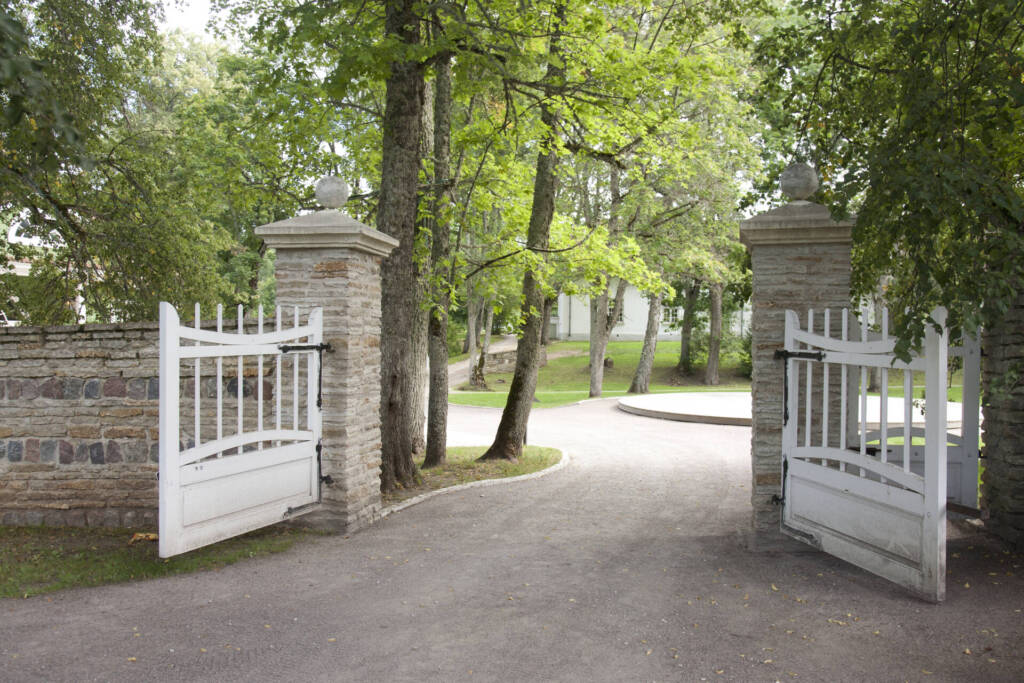
Accoya Wood – Pros & Cons
What is Accoya?
Accoya is a specially treated softwood (Radiata pine) modified via an acetylation process that dramatically improves durability, stability and weather resistance.
Pros
- High durability: Accoya is given a 50‑year warranty for above‑ground use.
- Excellent stability: Highly resistant to warping, shrinking or swelling.
- Eco‑friendly: Sourced from FSC® certified forests and non‑toxic.
- Beautiful finish: Ideal for traditional, rural or period homes.
Cons
- Higher upfront cost than standard softwoods.
- Requires finishing (paint or stain) to maintain appearance.
- More maintenance than metal alternatives.
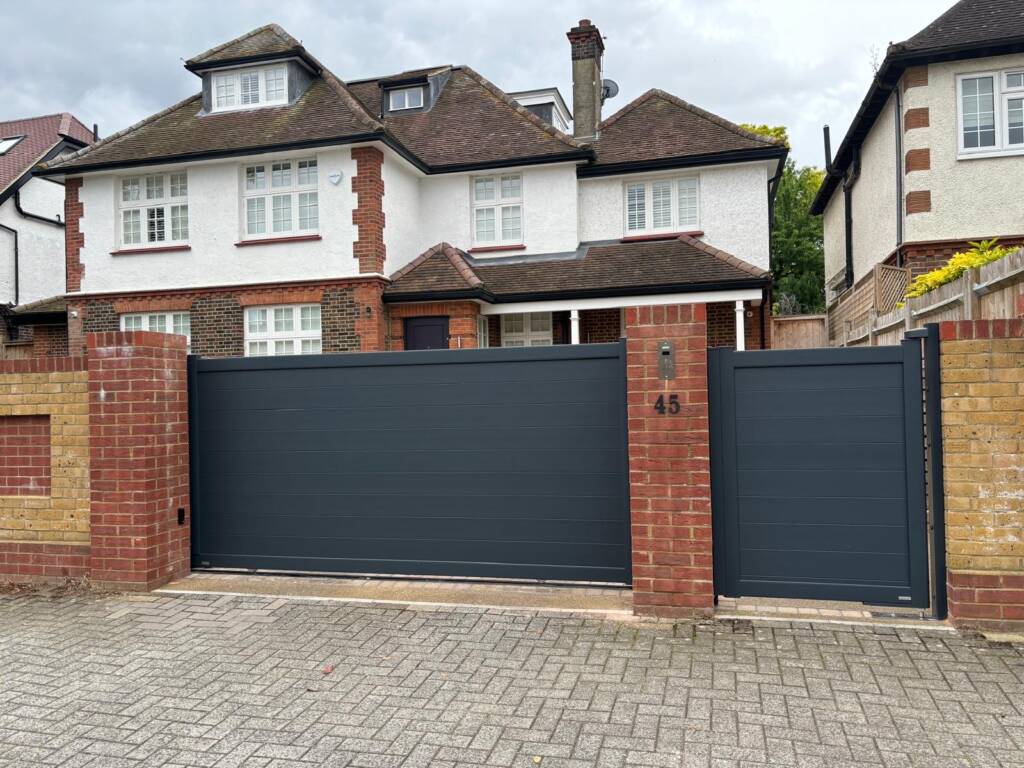
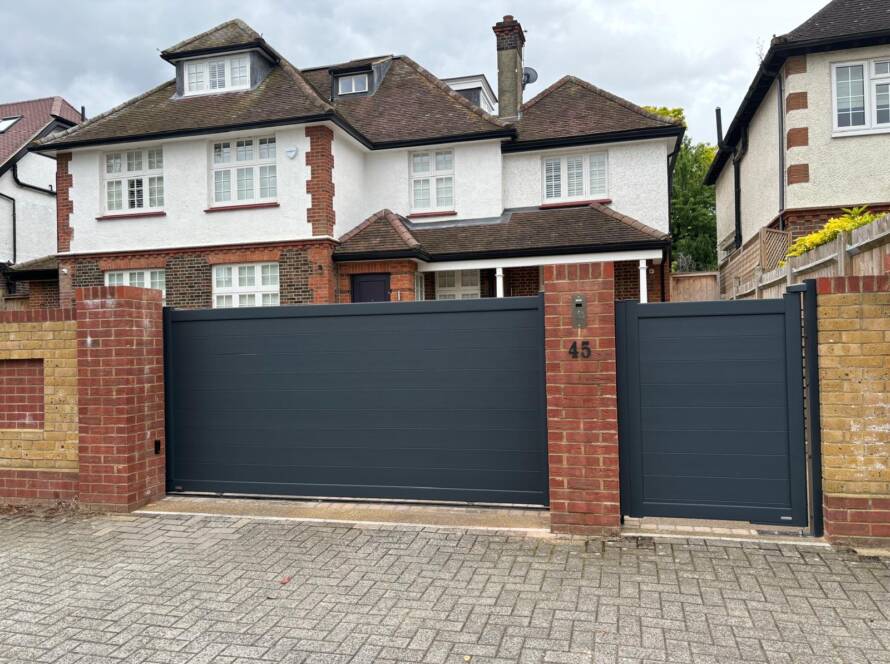
Aluminium – Pros & Cons
What is Aluminium?
Aluminium is a lightweight, rust-resistant metal that’s increasingly used for modern electric gates due to its clean look and minimal upkeep.
Pros
- Low maintenance: No rust and only occasional cleaning needed.
- Lightweight: Easier to automate and install.
- Versatile appearance: Available in wood-effect and any RAL colour.
- Ideal for contemporary homes and smaller motors.
Cons
- Can dent or scratch more easily than heavier metals.
- May lack the traditional “solid” feel of timber or iron.
- Bespoke designs and large spans can be costly.
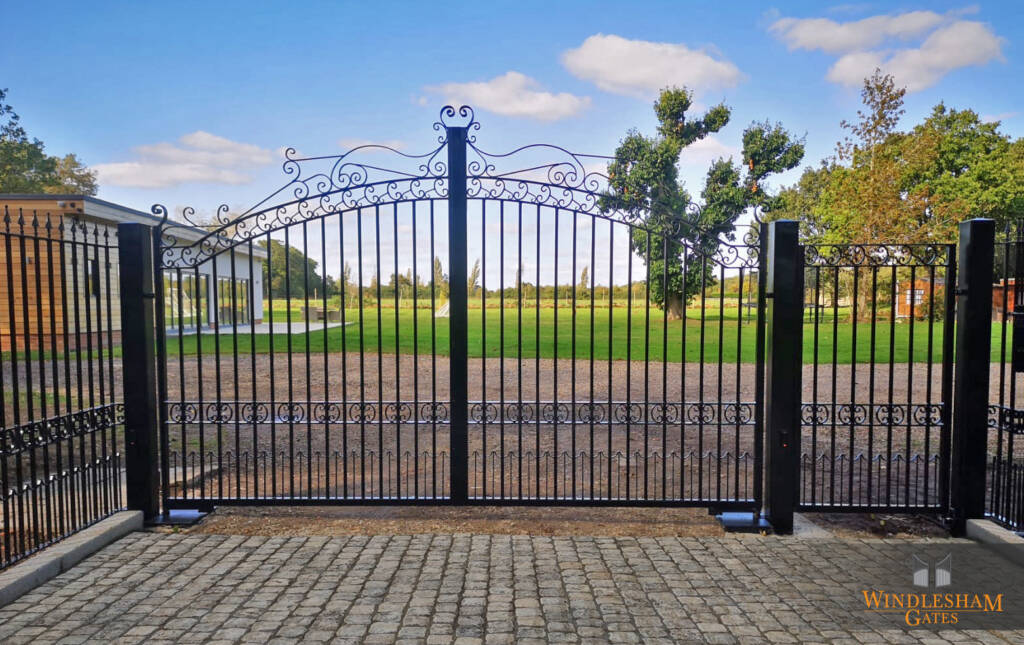
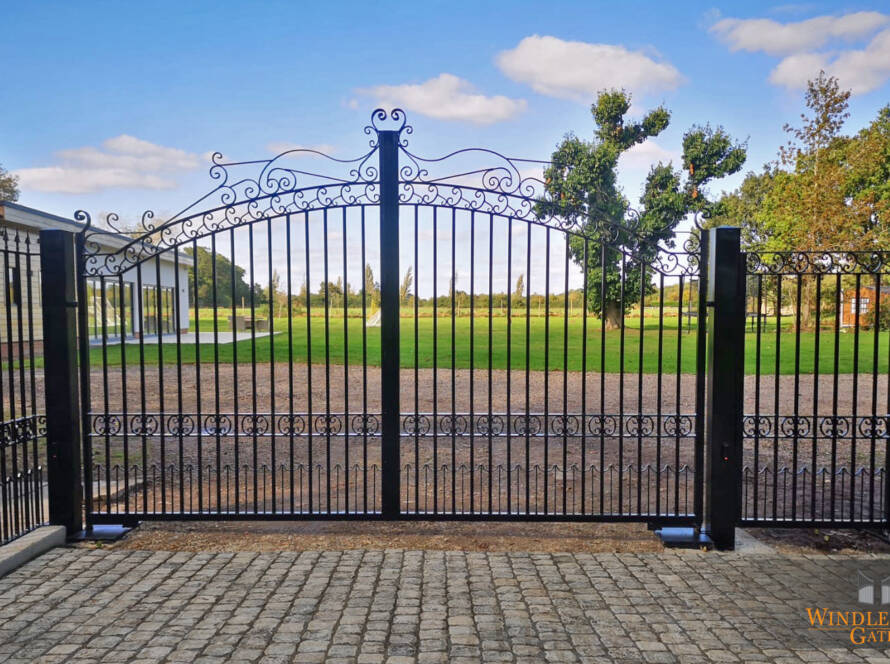
Wrought Iron – Pros & Cons
What is Wrought Iron?
Wrought iron is a traditional, hand- or machine-forged iron known for its strength and ornate design flexibility.
Pros
- Extremely strong and secure.
- Ornate and traditional styling—ideal for period or heritage homes.
- Long-lasting with proper maintenance.
Cons
- Heavy: Requires strong foundations and automation systems.
- Needs regular painting and anti-rust treatment.
- Typically more expensive due to labour and custom detailing.
Aesthetic Considerations
- Accoya offers a natural wood finish that suits traditional or heritage properties.
- Aluminium works well with modern designs, offering smooth lines and custom finishes.
- Wrought Iron brings a classic, elegant look—perfect for stately entrances and listed buildings.
When choosing a material, consider how it complements your home’s architecture, fencing, and garden design.
Durability & Maintenance
Material | Lifespan | Maintenance Level |
Accoya | 50+ years (above ground) | Moderate: coating upkeep |
Aluminium | 20–30+ years | Low: occasional cleaning |
Wrought Iron | 25–40+ years | High: painting, rust control |
Key takeaway: Aluminium is the most maintenance-free, Accoya combines sustainability with timber durability, and wrought iron requires upkeep but can last generations.
Cost Comparison
Material | Initial Cost | Maintenance Cost | Automation Compatibility |
Accoya | High | Moderate | Excellent |
Aluminium | Moderate–High | Low | Excellent |
Wrought Iron | High | High | Excellent (requires stronger systems) |
While aluminium and Accoya offer value through reduced maintenance and longevity, wrought iron typically comes at a premium due to weight, detailing, and regular care.
Conclusion
Choosing the right material for your electric gate system depends on what matters most to you: aesthetics, maintenance, cost or sustainability.
- Go with Accoya wood electric gates if you want a high-end timber look with long lifespan.
- Choose aluminium electric gates if you prefer low-maintenance modern design.
- Opt for wrought iron electric gates if you’re aiming for decorative, classic elegance and don’t mind regular upkeep.
Whichever you choose, be sure to work with a qualified installer to get the best from your investment—both in terms of style and performance.
FAQs
Which material is best for residential electric gates?
Aluminium for low-maintenance modern homes, Accoya for timber warmth and sustainability, wrought iron for traditional style and strength.
Are Accoya wood electric gates worth the cost?
Yes, especially if you want a timber gate with long life and excellent weather resistance.
Do aluminium electric gates rust?
No. Aluminium is rust-proof, making it ideal for UK weather conditions.
Is any gate truly maintenance-free?
No, but aluminium electric gates require the least upkeep. Accoya and wrought iron need more attention.
Which is best for modern homes?
Aluminium typically fits best with modern architecture due to its sleek appearance and finish options.
Do I need planning permission?
Usually not—but it depends on gate height, location (e.g. near a road), and whether the property is listed or in a conservation area.